
It’s the End of the Ports as We Know It, and I Need Wine
The shelves are about to go empty — again
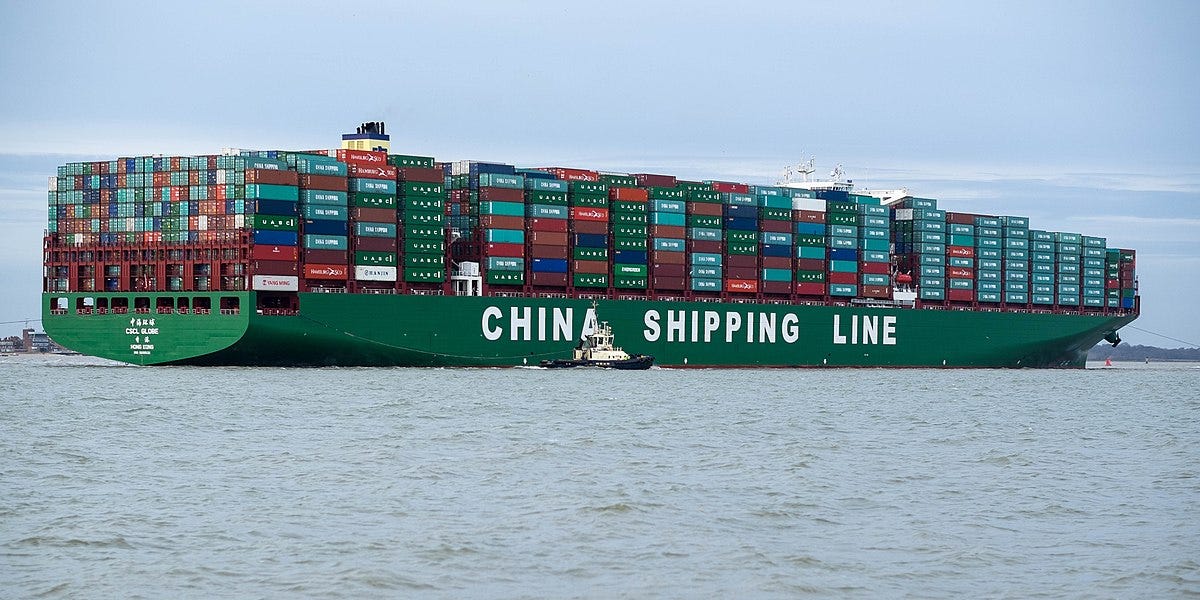
If you lived through the shortages of 2020 (and if you didn’t, you’re four, and you shouldn’t be reading this), you probably remember that creeping feeling: walking into a store and seeing rows of empty shelves. Unfortunately, we’re about to face something similar, but this time it’s not a virus causing the chaos. It's tariffs.
Over the past few weeks, something serious has started happening that most people haven’t noticed yet. The flow of container ships from China, which supply a huge share of the goods Americans buy every day, is slowing to a crawl. And it’s about to get worse.
Big box CEOs (the heads of Walmart, Target, Home Depot, and Lowe’s) have already warned that store shelves could soon be empty. An industry insider explained it even more bluntly: container bookings from China have “plummeted” as tariffs spike to record levels. What we’re seeing now is the last wave of Chinese cargo ships reaching U.S. ports. After they unload, there’s very little behind them. Anecdotally, people in Seattle and Los Angeles are reporting that their local ports, both of which do huge amounts of shipping to and from China, are empty—no ships to be seen.
This isn’t just a slowdown. It’s a crash.
Why Is This Happening?
The new round of tariffs slapped on Chinese goods raised rates to a punishing 145%. Importers are facing impossible choices: pay astronomical fees or stop buying altogether. For most, the math doesn’t work, so they’re canceling orders outright.
In just three weeks, container bookings from China to U.S. ports collapsed by more than 60%. Carriers canceled dozens of ocean sailings, some saying it's even worse than during COVID’s worst months. Ports like Los Angeles — America's busiest — are seeing future ship arrivals drop by up to a third compared to last year.
Some shipping analysts are already saying there’s no way to “recoup” the losses anytime soon. Once these goods stop flowing, there’s no magical backup source that can replace them overnight. Even if the tariffs were magically lifted and Chinese factories jumped back into production (both far-fetched), it would be months—months before America’s store shelves began to refill.
What This Means for Store Shelves
The first place you’ll feel this will be in stores.
If you need everyday goods — electronics, toys, furniture, clothing, household items — you're about to find a lot fewer options, and much higher prices.
Retailers like Walmart and Target stocked up ahead of the tariffs as much as they could, but those supplies will only last so long. Once they’re sold, they’re gone. And replacing them won't be easy. A massive chunk of what we buy simply isn’t made anywhere else at the scale America needs.
It’s not just finished goods, either. A lot of raw materials and parts, from plastics, steel components, and even circuit boards, come from China too. Without them, American factories will struggle to make finished products.
Trucking, Manufacturing, and Farming Will Feel It Too
This tariff shock won’t stay neatly inside retail. It’s about to spread across trucking, American manufacturing, and even farming.
Truckers who haul goods from ports to warehouses are already bracing for a huge drop in work. Fewer ships mean fewer containers to move. Some freight companies are warning of layoffs if volumes keep dropping. This is an astonishing turn from just three months ago, when most trucking firms couldn’t hire qualified drivers fast enough!
Manufacturers that rely on Chinese parts, everything from car makers to electronics companies, will soon face hard choices. Some will have to slow or even shut down production lines. In some cases, the smallest Chinese-made components or source materials might be critical to an assembled whole, preventing completed products from shipping.
Even agriculture gets hit. U.S. farmers depend on imported equipment, chemicals, and parts to run their operations. Without steady supply lines, farming costs could skyrocket at the worst possible time. While domestically produced food products are generally deemed “safe” from tariff impacts, anything that throws the already precarious position of American farmers into financial jeopardy could have a much larger impact on agriculture.
For things like coffee, chocolate, and exotic fruits that we’re used to having in all seasons (or just “regular” fruit in the off-seasons), we need to brace for the idea that there will be some things that will drastically increase in price.
What You Can Do
This isn’t about panic-buying. But it is about paying attention.
If there are essentials you know you’ll need later this year — tools, household basics, appliances, or even Christmas gifts — it may be smart to shop sooner rather than later. Especially Christmas gifts, because so many toys are made in China, the holiday season will definitely be impacted with shortages or much higher prices.
Prices are going to rise. Shortages are going to spread. And while things will eventually rebalance, it won’t be quick. Global supply chains aren’t light switches you can turn on and off.
We got a hard lesson in that during COVID. We’re about to get another one now.
Sources:
An Industry Insider Explains Why We Are About To See Widespread Shortages
Industry Leaders Warn Of Supply Chain Crisis As Trump Tariffs Hit US-China Trade
Trump Tariffs: Goods from China Keep Arriving at US Ports — But for How Long?
Trump Trade War: Difficult Decisions As China Shipments Cease
Huge Decline at LA Port Is a Hit to Truckers and a Stark Warning of Coming Tariff Damage
Traffic at the Port of Los Angeles Set to Plunge Amid Tariffs Disruption

Lawrence Winnerman
The science fiction writer
Lawrence Winnerman is a science fiction writer in Fort Wayne, Indiana. After twenty-five years leading technology programs at Amazon and Microsoft, he was chief operating officer of Blue Amp Media. In his Substack publication, The Hinge & The Near Field, he writes about AI and democracy and is serializing his novel Light Shines Through. He co-hosts The Daily Whatever Show. All stories by Lawrence
More from the Press
Trump Looked at Jon Husted's A$$, and Now We All Have ToMichigan Prison Guards Allegedly Filmed a Woman Giving Birth. Then They Strip-Searched Her.Susan Collins’s Allies Can’t Find Maine with a F@#king MapFrom the shop
 Whatever. | Deep Teal — 20 oz Mug
Watch
 May Their Memories Be a Blessing (to Nobody)